 |
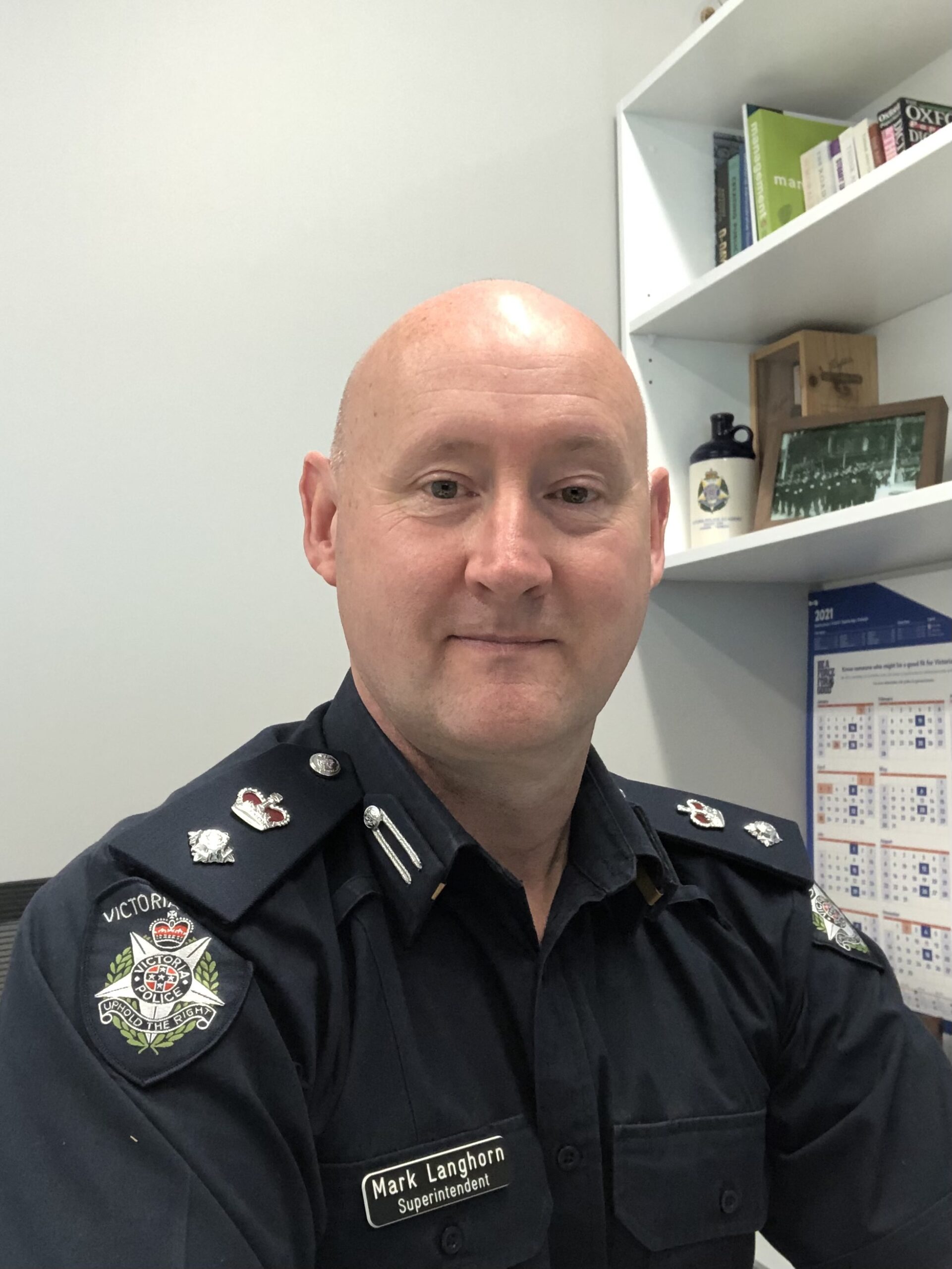
Mark Langhorn is a Superintendent with Victoria Police. He is the manager of the Policing Research and Reviews Division.
Mark’s current research project relates to building an evidence-based approach that transforms police agencies into learning organisations. Throughout a 28-year career with Victoria Police, Mark has overseen policing in Inner Gippsland, based at Morwell, and worked closely with government and community agencies to deliver localised services to a unique and extensively disadvantaged community. He has also worked as the Local Area Commander of Greater Dandenong and Officer in Charge of the Sexual Crime Squad. Mark is a Williamson Community Leadership Program alumni and holds a Master of Research and Master of Public Policy & Administration. His research fields have focused on organised crime and sex trafficking in Australia. In 2008, Mark was awarded a Winston Churchill Fellowship to study transnational crime investigation methods & training practices. Mark is a board member of Leadership Victoria and committee member of Scleroderma Victoria. |
Concurrent Session Two – Excellence in Leadership: How can we do better? Local knowledge to inform local intervention to reduce youth contact with the justice system.
This presentation details an aspect of a translational research project that examined how police data sets can be applied to enhance the effectiveness of developmental prevention strategies. The presentation highlights systemic aspects of delivering practice innovations, utilising and sharing data sets across service systems and the importance of place-based initiatives in increasing efficacy in youth crime prevention. The research findings are considered in terms of police operational processes and broader practice implications for the local service system. Key findings considering current practice and potential innovations to respond effectively at police contact with youth are discussed. The research indicated that it is feasible to intervene with vulnerable young people at their first contact with police, even before offending to reduce the potential of future involvement in the criminal justice system.