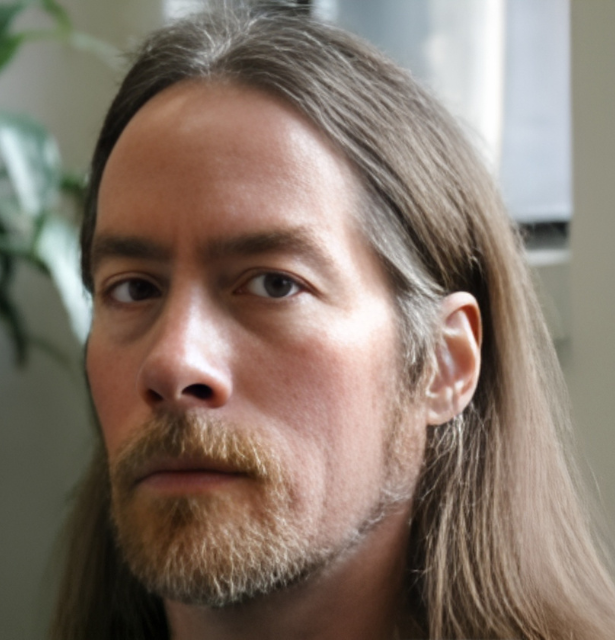
 David M. Kennedy is a professor of criminal justice at John Jay College of Criminal Justice in New York City and the director of the National Network for Safe Communities at John Jay. Mr. Kennedy and the National Network support cities implementing strategic interventions to reduce violence, minimize arrest and incarceration, enhance police legitimacy, and strengthen relationships between law enforcement and communities. These interventions have been proven effective in a variety of settings, have amassed a robust evaluation record, and are widely employed nationally and internationally.
Mr. Kennedy was a principal in the Boston Gun Project in the mid-1990s, which pioneered a high-level action-research approach to public safety and the groundbreaking “Operation Ceasefire” homicide prevention strategy, and from which Kennedy developed the “focused deterrence” intervention framework. He has developed interventions focused on group and gang violence, individual violent offenders, intimate partner violence, street drug markets, opioid markets, prison safety, and other public safety issues. He has worked with numerous cities and states, and with the federal government to design and implement the Treasury Department’s Youth Crime Gun Interdiction Initiative and the Department of Justice’s Strategic Approaches to Community Safety Initiative; Drug Market Intervention Program; and National Initiative for Building Community Trust and Justice. He launched John Jay’s Institute for Innovation in Prosecution, now a stand-alone entity at the college. Mr. Kennedy’s work has won two Ford Foundation Innovations in Government awards, two Webber Seavey Awards from the International Association of Chiefs of Police, and two Herman Goldstein Awards for Problem-Oriented Policing. He was awarded the 2011 Hatfield Scholar Award for scholarship in the public interest.
He is the author of Don’t Shoot, One Man, a Street Fellowship, and the End of Violence in Inner-City America, Deterrence and Crime Prevention: Reconsidering the Prospect of Sanction, co-author of Beyond 911: A New Era for Policing, and a wide range of articles on group and gang violence, drug markets, domestic violence, firearms trafficking, deterrence theory, crime prevention, police/community relations, and other public safety issues, as well as on action-research methodology. The monograph A Framework for Addressing Violence and Serious Crime: Focused Deterrence, Legitimacy, and Prevention, co-authored with Anthony Braga, was published by Cambridge University Press in 2021.
Presentations
What works in creating what works?
Policing – and the public it serves – needs innovative, effective approaches to important crime and public safety problems. The record shows that it is fully capable of producing them, whether from particular frameworks such as problem-oriented policing or from the too-often unsung and unrecognized richness of front-line thought and practice. Kennedy will address key aspects of what it takes to generate such innovative interventions: the limits of dominant “enforcement” and “prevention” frameworks; adopting a situational, problem-oriented mindset; intervention design as a creative act; simple but powerful policy analysis tools; the crucial role of simple questions; the power of front-line experienceand action; critical empirical foundations for effective interventions; and the relatively recent development of powerful frameworks for guiding thought and action. He will argue that policing can and should envision a fundamentally new science and practice of public safety.
Addressing community, youth, and ‘gang’ violence
The last several decades have seen the emergence of, for the first time, evidence-based violence prevention: there is now a small but critically important body of work that can be dramatically effective in preventing the most serious violence. It has been built on a set of core empirical facts, chiefly that the most serious violence is enormously concentrated in very small numbers of exceptional people, frequently operating in groups and networks rather than as individuals. It has led to a set of core strategies and tactics, with new approaches and roles for police and law enforcement, communities, and service providers; new and powerful partnerships amongst them; and adaptation to a growing range of serious public safety problems. Kennedy will sketch this proved, and rapidly evolving, field.